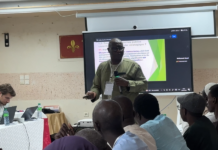
Will the moratorium on coastal demersal fishing licenses dating back to 2006 be lifted? The debate has been sparked by a ministerial decree from the Ministry of Fisheries and the Maritime Economy lifting the measure. Enough to make sector stakeholders kick up a fuss. Among them, the Group of Shipowners and Fishing Industry Professionals in Senegal (GAIPES), through its Secretary General, Alassane Dieng. Interview with Espacedev.
Espacedev: The Ministry of Fisheries has just decided, by decree, to lift the moratorium on coastal demersal fishing licenses. Could you revisit the motivations that underpinned this 2006 moratorium?
Alassane Dieng: The moratorium on coastal demersal fishing licenses introduced in 2006 resulted from a dual observation. On the one hand, there was unanimous agreement regarding the proven and alarming state of overexploitation of coastal demersal resources. On the other hand, a strong consensus emerged among sector stakeholders, particularly GAIPES members, which lent legitimacy and acceptance to the measure.
It was therefore a decision that was both scientifically grounded and supported by the industry, taken in a spirit of collective responsibility to avoid an ecological and economic point of no return for this fishery.
What species were targeted, specifically, and why?
The stocks in question are commonly referred to as “coastal demersal stocks.” They comprise so-called “noble” species, highly prized in markets, which inhabit seabeds near coastal areas. Three main categories are distinguished:
- Fish: thiof, yakh, dorades, sompatt, dentex, soles, among others;
- Mollusks and cephalopods: octopus, cuttlefish, squid, volutes, etc.;
- Crustaceans: notably white shrimp.
The sensitivity of these species lies, among other things, in their coastal habitat, which is particularly vulnerable to anthropogenic pressures. Their overexploitation has lasting and difficult-to-reverse effects.
To justify lifting the moratorium, the pretext of an exploitable potential was raised in the ministerial decree. Does this argument hold water?
No, the argument put forward is not credible. From a biological resource perspective, the announced tonnage of approximately 3,000 tonnes is overestimated and does not reflect biological reality: taking into account all species sharing the same biotope and exhibiting a biomass deficit, the truly exploitable volume would barely exceed 2,000 tonnes. It is therefore a misleading figure that ignores ecosystem interactions.
From a procedural standpoint, the decision was made unilaterally and without consultation with sector stakeholders — a stark contrast to the participatory process that governed the 2006 moratorium. It constitutes a clear violation of the precautionary principle, recognized in international law, and of commitments made under the Charter for Sustainable Fishing promoted by CONAPED.
The pretext of supplying the national market also does not hold up. Faced with an apparent availability for local consumption currently estimated at approximately 220,000 tonnes (Dr. Idrissa DIEDHIOU, Marine Science, April 2026), 2,000 to 3,000 tonnes of fishery products represent less than 5 days of annual consumption — a negligible contribution. Furthermore, the selling prices of the demersal species concerned are beyond the purchasing power of the majority of Senegalese, particularly in rural and remote areas of the country.
The decree mentions five industrial vessels flying the Senegalese flag that will be allowed access to coastal demersal fishing. Why do you denounce such a procedure?
This measure raises grave and serious questions on several levels.
Ecologically, increasing fishing effort on already weakened stocks risks causing an ecological disaster with profound economic and social consequences.
In terms of transparency and equity, the situation is, to say the least, troubling. Because of the moratorium for over 20 years, license applications for this fishery were practically no longer submitted. How can one explain that a single shipowner — among all private operators in the sector — was apparently informed first of the possibility of accessing this fishery, and sought to be awarded four of the five licenses? What criteria governed this choice? This opacity is in total contradiction with the principles of Jub, Jubal, Jubanti (truth, justice, transparency) advocated by the authorities.
Legally, this decision appears to violate the recently adopted law on the right to information, which enshrines the right of citizens and economic actors to be informed of public decisions concerning them.
Finally, it is legitimate for the press and citizens to question the history of IUU (Illegal, Unreported, and Unregulated) fishing of the shipowner being granted four licenses for such a fragile and sensitive resource.
Could this moratorium, now nearly twenty years old, continue to be observed?
Yes, unequivocally. Maintaining the moratorium is imperative not only as an ecological necessity, but as an imperative of intergenerational justice.
The Senegalese fishing sector cannot afford hasty and opportunistic decisions regarding resources whose recovery, once collapsed, can take decades.
Hence a solemn appeal to the Senegalese authorities to reverse this decree and reaffirm the moratorium.
Interview conducted by Mandiaye THIOBANE
" "